

“Development of innovative analytical methods with application in authenticity control and geographical origin and production certification of agricultural and food products.
“
“Development of innovative analytical methods with application in authenticity control and geographical origin and production certification of agricultural and food products.”



Our Work
Challenges
Competition
The increase of competition in the global food market, combined with the consumers demand and expectation for high-quality products, lead to the need for the development of new tools and methodologies for controlling the quality and authenticity of food.
Current Situation
The uniqueness of products of specific geographical indication is mainly based on quality characteristics which are difficult to be reflected as physical-chemical parameters. Although, the differentiated physico-chemical values are included in the specific characteristics of such products, they cannot be considered as parameters for geographical indication and do not allow the discrimination from similar products.
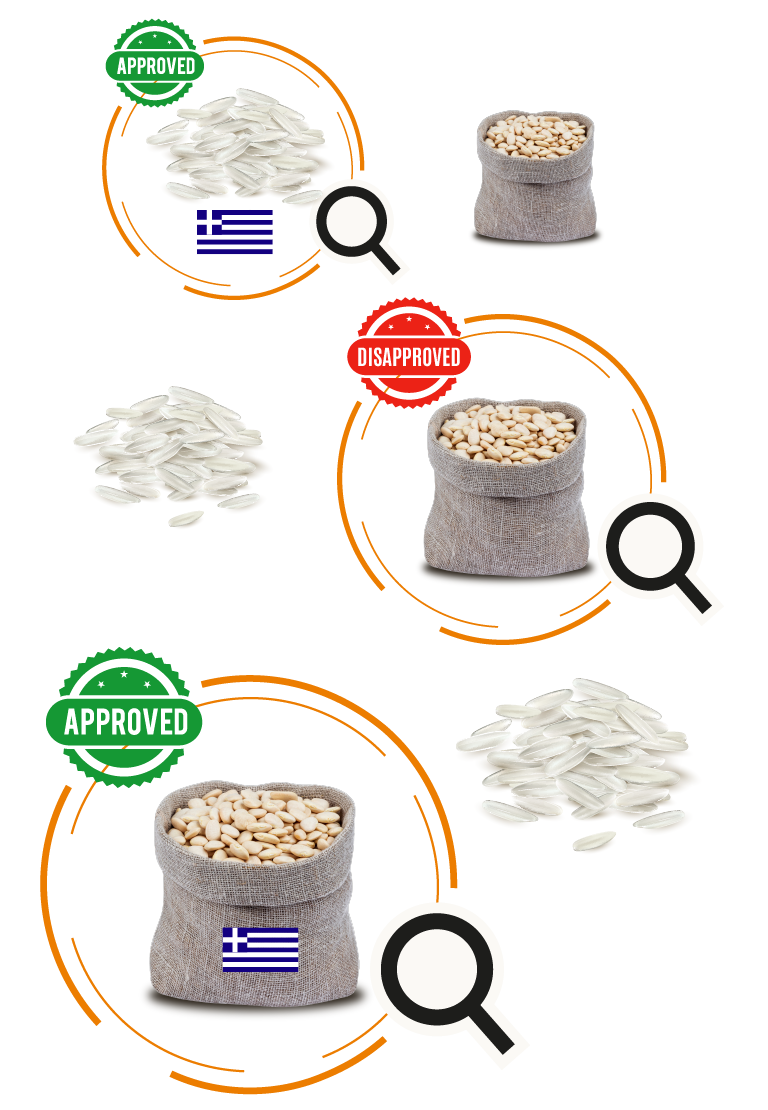
Restrictions on verifying the geographical origin of agricultural products
Even though diverse analytical methods can be utilized to inspect the composition and/or possible adulteration of agricultural products, they provide only limited information concerning the geographical origin. It is commonly accepted that the development of analytical techniques for authenticity control and verification of geographical origin is a particularly challenging problem.
Unfair Competition
Τhe marketing of counterfeit or altered products creates unfair competition for the genuine ones. Thus, it is required the development of specific analytical techniques and parameters that will allow more effective control of the geographical origin of agricultural and food products.
Methodology
Isotopic methods have been a useful tool in the fight against food fraud since the early ’90s. This analytical method is based on the fact that the isotopic composition of products of specific geographical origin is directly related to the environmental conditions and natural resources of the area in which they are grown. These conditions are characterized by specific values of stable isotope ratios of the elements C, N, and, more recently, S. This variation in the isotope ratio is due to differences in kinetic or thermodynamic factors (physical and/or (bio)chemical processes), and therefore precise information regarding climate, distance from the sea, geographical coordinates, and applied cultivation practices are included. Consequently, the isotopic composition of products from a specific geographical region is considered stable and characteristic of their origin, constituting their isotopic fingerprint.
In addition to the isotopic fingerprint, the determination of the elemental fingerprint of the investigated agricultural and food products can significantly enhance the accuracy and discriminatory power of the applied methodology for identifying their geographical origin. Indeed, the elemental composition of plant tissues, as expected, is directly related to the soils in which they are cultivated, reflecting the availability and presence of bio-available nutrients.
Results
Development of an effective methodology for geographical origin discrimination.
Our research aims to the development of a functional and efficient network of methodologies for the discrimination of geographical origin and the certification of applied cultivation techniques for the production of agricultural products.
Improvement of competitiveness
The improvement of the competitiveness can be achieved with the extroversion of domestic agricultural production.

Dealing with the problem of counterfeits (domestic product substitution with imported ones)
Protection of products with high added value (PDO, PGI, etc.) from unfair competition (problem of domestic product substitution with imported ones).
Income increase
Increasing the income of producers and enterprises of agricultural products.